- Kreatio
- Posts
- Creativity Doesn't Care About Your Report Card
Creativity Doesn't Care About Your Report Card
Because imagination speaks a language your intellect can’t translate.

V.C. Hanna
November 05, 2025

INSPIRING QUOTE
Beyond the Measurable Mind
Straight A's. Perfect test scores. Sky-high IQ. None of it predicts creativity. The correlation? Zero.
“Creativity is absolutely unrelated to IQ.”
When John Cleese said this in his 1991 lecture on creativity, he wasn’t dismissing intelligence, he was redefining it.
We’re taught to see intellect as something you can measure: how fast you think, how precise you are, how well you test (e.g. IQ, SAT, etc.). But Cleese argued that creativity lives in a completely different register; one that’s slower, softer, and difficult to score.
When psychologist Donald MacKinnon studied scientists, architects, engineers, and writers in the 1970s, he discovered something remarkable: those regarded by their peers as "most creative" were in no way different in IQ from their less creative colleagues.
High IQ helps you climb the ladder faster executing efficiently. But creativity? Creativity makes you stop mid-climb and ask: Am I on the right ladder? Is this ladder leaning against the right floor? What if we need a bridge?
Creativity isn't a talent you either have or don't have. It's a way of operating. It emerges when we give ourselves permission to be curious, to tolerate uncertainty, to let our minds wander without rushing to solutions. It flows from playfulness, not processing power.
You need five things for creativity: space, time, time again, confidence, and humor. You can’t become playful, and therefore creative, if you’re under your usual pressures.”
One of the most vivid proofs of that truth can be found in a small Alabama town, where a group of women with no training, no credentials, and no formal “intelligence” by society’s standards quietly rewove the meaning of genius.
This Week’s Kreatio’s Edition Is Sponsored:
Your Boss Will Think You’re an Ecom Genius
Optimizing for growth? Go-to-Millions is Ari Murray’s ecommerce newsletter packed with proven tactics, creative that converts, and real operator insights—from product strategy to paid media. No mushy strategy. Just what’s working. Subscribe free for weekly ideas that drive revenue.
🐝 Beyond The Buzz Trivia:

CREATIVITY SPOTLIGHT

Please Check Your IQ at the Door
In a small bend of the Alabama River, surrounded by cotton fields and dirt roads, a group of women turned scraps into masterpieces.
During the Great Depression, President Roosevelt’s own relief agents called Gee’s Bend one of the poorest places in America. A bend so remote that aid had to arrive by boat.
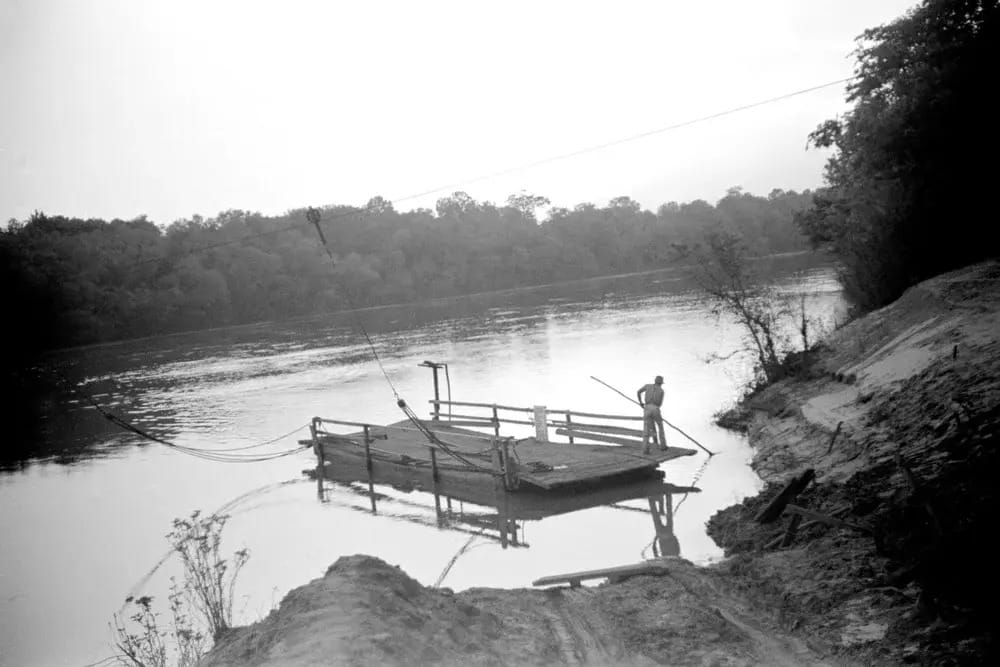 Old cable ferry between Camden and Gee’s Bend, Alabama. 1939. |  Plowing at Gee’s Bend. 1937. |
Gee’s Bend, an isolated African American community descended from enslaved laborers, had little access to money, schooling, or materials. But they had fabric, including old denim, flour sacks, torn dresses. And from these fragments, they made quilts unlike anything the art world had ever seen.
💡 How They Made Them
Their stitching was not symmetrical or precise. The quilters improvised by slanting patterns, clashing colors, and breaking the rhythm in borders. Yet when these quilts were rediscovered decades later and hung in museums from New York to London, critics compared them to modernists like Matisse and Mondrian. The quilters, who’d never heard of either, simply shrugged.
They weren't making "art." They were keeping warm.
💡 Where It Came From
Their genius was embodied, learned not from textbooks, but from living. Rhythm absorbed from gospel music. Geometry observed in plowed fields. Color harmonies drawn from sunsets over the Alabama River. Each quilt carried memory: a daughter's dress, a husband's work shirt, fabric from a church social.
This wasn't cognitive intelligence. It was intelligence written in the body, passed through hands, remembered in patterns.
 Housetop Variation by Loretta Pettway. | 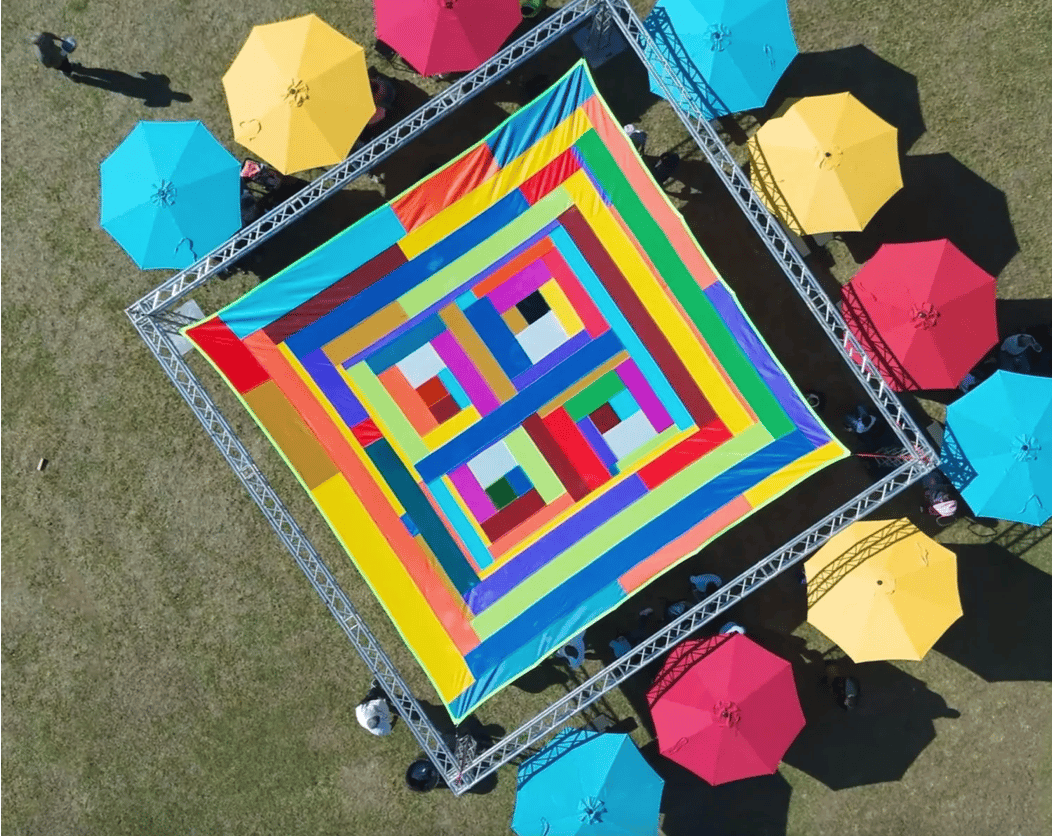 Contemporary quilt from a festival. |
💡 What It Proves
When the art world finally took notice, the Gee's Bend quilts shattered a long-held assumption: that brilliance must be intentional, educated, elite. Instead, these women proved that the deepest creativity doesn't have to begin with theory, it can begin with necessity, care, and collective memory.
Their art started as survival and ended as transcendence. Not because they studied harder or tested better, but because they trusted what their hands already knew.
The most creative people are prepared to play with ideas because they are not frightened of being wrong.”
In Gee's Bend, their creativity proved that the deepest kind of intelligence doesn't just solve problems, it sings through them.
BLINKS, THINKS & LINKS

Curiosity Candy
John Cleese in a short form video emphasizing that creativity thrives on non-judgment, not error-free thinking.
Gee's Bend, Alabama: A documentary-style video that follows the quilters’ lives, their creative process, and community.
Research Paper: Why Creativity Isn’t in IQ Tests, Why it Matters, and Why it Won’t Change Anytime Soon Probably
ACTIONABLE PROMPTS

The Credential-Free Zone
Think of one task or domain you’ve quietly wanted to explore but have always felt “unqualified” for: designing a slide, creating a financial model, sketching a product idea, rethinking a process.
Then, set aside two hours to experiment without expectation or expertise. Approach it with curiosity, not performance.
Creativity is not a talent. It is a way of operating.”
Creativity doesn’t require good grades. It begins the moment you start trying.
Thanks for reading,
V.C. Hanna
Founder, Kreatio
